
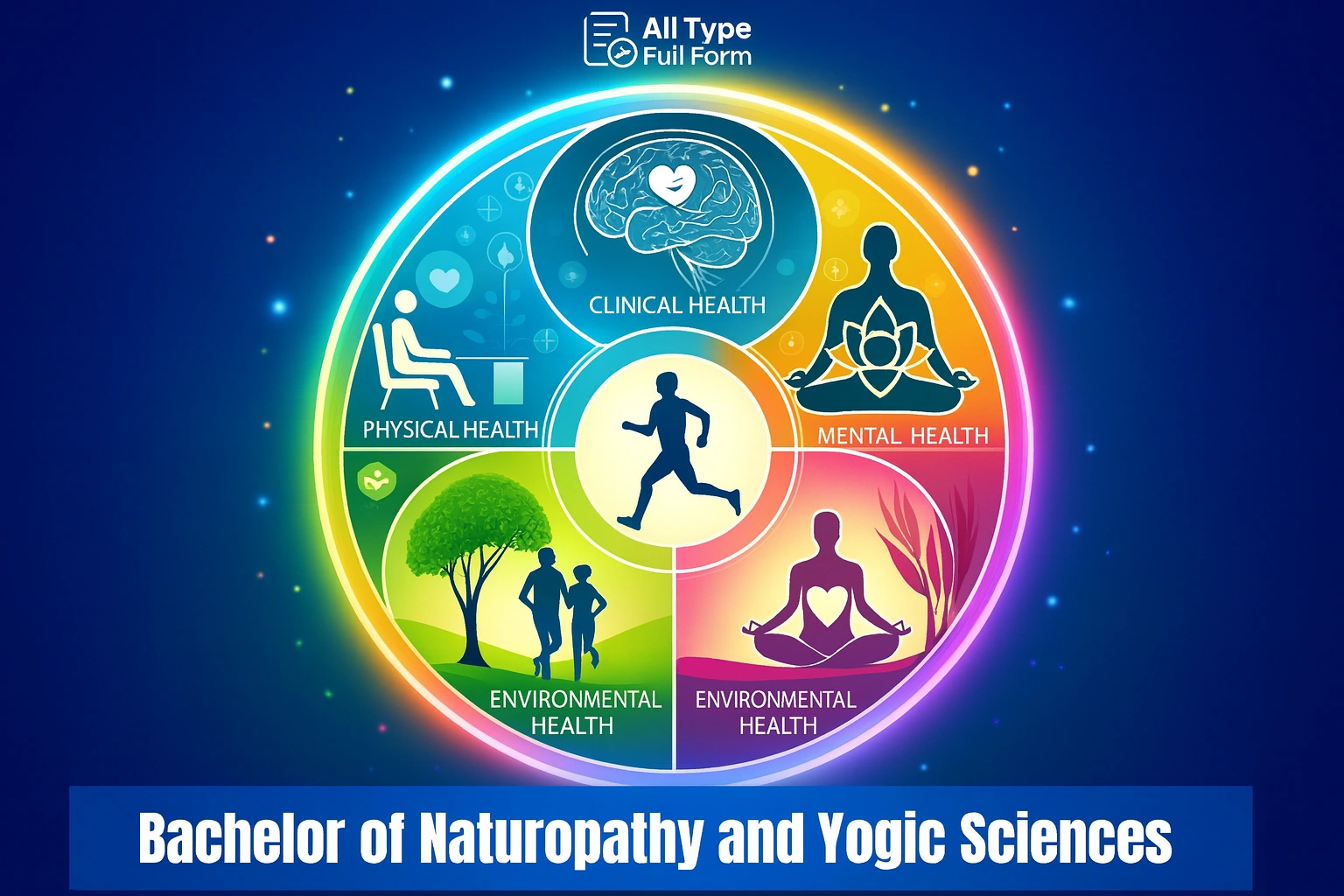
The BNYS full form is “Bachelor of Naturopathy and Yogic Sciences,” a degree that integrates natural healing with the time-honored practice of yoga. Grasping this full form goes beyond merely recognizing an abbreviation—it aids students, health aficionados, and those exploring career options in finding a significant journey towards holistic wellness.
If you are interested in careers related to natural medicine or are seeking clarity, this guide will simplify everything and make it engaging.
What Does BNYS Stand For? The Big Reveal!
Drumroll, please… BNYS full form is Bachelor of Naturopathy and Yogic Sciences. Yes, you read that right! It’s not about banking systems or some tech jargon—it’s a legitimate medical degree that combines the ancient wisdom of naturopathy and yoga with modern medical science.
Think of it as the perfect marriage between your grandmother’s home remedies and contemporary healthcare. Pretty cool, right?
Quick Stats:
| Parameter | Details |
|---|---|
| Full Form | Bachelor of Naturopathy and Yogic Sciences |
| Duration | 5.5 years (including 1-year internship) |
| Eligibility | 10+2 with Physics, Chemistry, Biology |
| Average Course Fees | ₹50,000 – ₹3,00,000 per year |
| Government College Fees | ₹20,000 – ₹1,00,000 per year |
| Starting Salary | ₹2,50,000 – ₹5,00,000 per annum |
| Recognition | Central Council of Indian Medicine (CCIM) |
| Practicing Rights | Can use “Dr.” prefix after completion |
The Story Behind BNYS: Why It Matters Now More Than Ever
Let’s rewind a bit. In 2016, the Indian government officially recognized naturopathy and yoga as a part of AYUSH (Ayurveda, Yoga & Naturopathy, Unani, Siddha, and Homeopathy). This was a game-changer! Suddenly, what was once considered “alternative medicine” got the official stamp of approval.
But why the big fuss about BNYS full form in medical education? Here’s the deal: we’re living in an era where people are increasingly disillusioned with popping pills for every little ailment. Antibiotic resistance is real, lifestyle diseases are skyrocketing, and everyone’s grandmother was apparently onto something with those turmeric lattes.
Expert Insight
Dr. Anjali Sharma, a practicing BNYS doctor with 8 years of experience, shares: “The beauty of BNYS lies in its holistic approach. We don’t just treat symptoms; we address the root cause. I’ve seen patients with chronic conditions improve dramatically through proper dietary changes, yoga therapy, and natural treatments—without a single pharmaceutical drug.”
What Exactly Do You Study in a BNYS Course?
Alright, let’s get down to the nitty-gritty. When we talk about BNYS course details, we’re looking at a comprehensive curriculum that spans 5.5 years. And trust me, it’s not just about doing downward dogs and recommending herbal teas (though those are part of it!).
First Year: Building the Foundation
You’ll dive into subjects like:
- Human Anatomy
- Physiology
- Biochemistry
- Introduction to Naturopathy Philosophy
- Basic Yoga practices
Yes, you’ll be in a lab, dissecting and learning just like your MBBS counterparts. Surprised? Most people are!
Second & Third Year: Getting Deeper
The BNYS syllabus gets juicier here:
- Pathology
- Microbiology
- Pharmacology
- Naturopathic Treatment Methods
- Advanced Yoga Therapy
- Nutrition and Dietetics
- Hydrotherapy, Mud Therapy, Massage Therapy
Fourth Year: Clinical Application
This is where theory meets practice:
- Clinical Diagnosis
- Disease Management through Naturopathy
- Emergency Medicine
- Community Medicine
- Obstetrics and Gynecology (Naturopathic approach)
Fifth Year: Internship
The final year is all about hands-on experience in hospitals and clinics recognized by the Central Council of Indian Medicine.
The Money Talk: BNYS Course Fees and Salary Expectations
Let’s address the elephant in the room—because let’s be honest, finances matter!
Course Fees Breakdown
When exploring BNYS course fees, you’ll find a wide range depending on whether you choose government or private institutions:
Government Colleges: The BNYS course fees in government college are significantly more affordable, ranging from ₹20,000 to ₹1,00,000 per year. Some popular government institutions include:
- National Institute of Naturopathy, Pune
- Government Yoga and Naturopathy Medical College, Chennai
- Rajiv Gandhi Government General Hospital, Chennai
Private Colleges: Private BNYS colleges charge anywhere between ₹50,000 to ₹3,00,000 per year. While more expensive, they often offer better infrastructure and additional facilities.
The Salary Scenario
Now for the million-dollar question (well, hopefully close to it!): BNYS full form salary expectations.
Starting Salary: Fresh graduates typically earn between ₹2,50,000 to ₹5,00,000 per annum.
Mid-Career: With 5-7 years of experience, salaries can jump to ₹6,00,000 – ₹12,00,000 per annum.
Established Practitioners: If you set up your own clinic or wellness center, the sky’s the limit. Many experienced BNYS doctors earn upwards of ₹15-20 lakhs annually.
Pro Tip: The real money in BNYS isn’t just in clinical practice. Think spa consultancies, corporate wellness programs, resort tie-ups, and online consultations. The wellness industry is booming, and BNYS graduates are perfectly positioned to capitalize on it.
Career Opportunities: More Than You’d Imagine
When people ask about a BNYS doctor, they often picture someone in a clinic recommending juice cleanses. While that’s part of it, the career scope is so much broader!
Where Can You Work?
- Naturopathy hospitals and clinics
- Wellness resorts and spas
- Fitness centers and gyms
- Corporate wellness programs
- NGOs focusing on community health
- Sports teams (as a yoga and wellness consultant)
- Academic institutions (as a lecturer)
- Your own practice
Entrepreneurial Opportunities:
- Start your own naturopathy clinic
- Launch a wellness blog or YouTube channel
- Develop wellness apps
- Create online consultation services
- Offer workshops and training programs
According to a Global Wellness Institute report, the wellness economy is worth $4.9 trillion globally, with India emerging as a key player. That’s a massive pie, and BNYS graduates get a delicious slice!
BNYS in Different Languages: A Quick Guide
For my Hindi-speaking friends wondering about BNYS full form in Hindi, it’s: प्राकृतिक चिकित्सा और योग विज्ञान स्नातक (Prakritik Chikitsa aur Yoga Vigyan Snatak).
And for those searching for BNYS full form in Tamil: இயற்கை மருத்துவம் மற்றும் யோகா அறிவியல் இளங்கலை (Iyarkai Maruthuvam Matrum Yoga Ariviyal Ilankalai).
The beauty of this course is that while it’s rooted in Indian traditions, it’s recognized and valued globally. You can practice anywhere in the world, though additional certifications might be required in some countries.
Real Talk: Is BNYS Worth It in 2025?
Let me be straight with you—BNYS isn’t for everyone. If you’re looking for the prestige of an MBBS degree or dream of performing complex surgeries, this might not be your path. But if you’re passionate about preventive healthcare, natural healing, and holistic wellness, BNYS could be your calling.
Pros:
- Growing industry with increasing acceptance
- Lower course fees compared to MBBS
- Holistic approach to healthcare
- Multiple career pathways
- Can use “Dr.” prefix
- Less stressful than conventional medical practice
Cons:
- Still faces some skepticism in traditional medical circles
- Cannot prescribe allopathic medications
- May require additional certifications for international practice
- Building a practice takes time and patience
How to Get into a BNYS Program
The admission process for BNYS course details typically involves:
- Eligibility: You need to have completed 10+2 with Physics, Chemistry, and Biology (PCB). Most colleges require a minimum of 50% aggregate marks.
- Entrance Exams: Many states conduct their own entrance exams. Some popular ones include:
- NEET (for certain colleges)
- State-level AYUSH entrance exams
- University-specific entrance tests
- Counseling: Based on your rank, you’ll be called for counseling where you can choose your preferred college.
Expert Insight: Educational counselor Rajesh Kumar advises, “Start preparing early. While BNYS has relatively lower cut-offs than MBBS, good government colleges are competitive. Focus on your PCB subjects and stay updated with current trends in holistic health.”
The Future of BNYS: What Lies Ahead
The trajectory for BNYS graduates looks incredibly promising. With the Indian government’s push for AYUSH systems, increased funding for naturopathy hospitals, and growing public awareness about preventive healthcare, the opportunities are expanding rapidly.
The COVID-19 pandemic was a wake-up call for many. People realized that immunity, lifestyle, and holistic health matter more than quick fixes. This shift in mindset is creating unprecedented demand for qualified BNYS professionals.
According to the Ministry of AYUSH, there are over 10,000 registered naturopathy and yoga practitioners in India, and this number is growing by 15-20% annually. The government is also setting up more naturopathy hospitals and wellness centers across the country.
Making Your Decision: Is BNYS Right for You?
Before you take the plunge, ask yourself:
- Are you genuinely interested in natural healing and yoga?
- Do you have the patience for a holistic approach (results can take time)?
- Are you comfortable with the fact that you won’t be prescribing conventional medicines?
- Do you see yourself as part of the wellness revolution?
If your answers are mostly yes, then BNYS full form—Bachelor of Naturopathy and Yogic Sciences—might just be your ticket to a fulfilling and prosperous career.
For more detailed information on admission processes and recognized colleges, you can visit the National Institute of Naturopathy official website.
Disclaimer:
This article is for informational purposes only and should not be considered medical or career advice. Please consult with qualified educational counselors and healthcare professionals before making any decisions regarding your education or health.
Conclusion:
The BNYS full form is Bachelor of Naturopathy and Yogic Sciences, which is a 5.5-year medical degree that integrates natural healing practices and yoga with contemporary scientific principles. This program emphasizes addressing the underlying causes of health issues through dietary modifications, lifestyle adjustments, yoga therapy, and naturopathic interventions.
Given its reasonable tuition, increasing demand, and a variety of career opportunities in hospitals, wellness centers, resorts, and private practice, BNYS represents a commendable option for students pursuing a career in holistic healthcare and preventive wellness. Explore everything you need to know in our complete SIDBI Full Form guide.
Frequently Asked Questions
Q1: Can a BNYS doctor practice surgery?
No, BNYS doctors cannot perform surgeries. They focus on natural, non-invasive treatments but can handle emergency first aid.
Q2: Is BNYS recognized internationally?
BNYS is recognized in India by CCIM. For international practice, additional certifications may be required depending on the country.
Q3: What’s the difference between BNYS and BAMS?
BAMS focuses on Ayurveda, while BNYS combines naturopathy and yogic sciences. Both are AYUSH systems with different treatment approaches.
Q4: Can I pursue BNYS after MBBS?
Yes! Many allopathic doctors pursue BNYS as an additional qualification to offer holistic treatment options.
Q5: Are there good placement opportunities after BNYS?
Yes, growing demand exists in wellness centers, hospitals, resorts, corporate wellness programs, and private practice.
 Explore a wide range of full forms at All Type Full Form.