
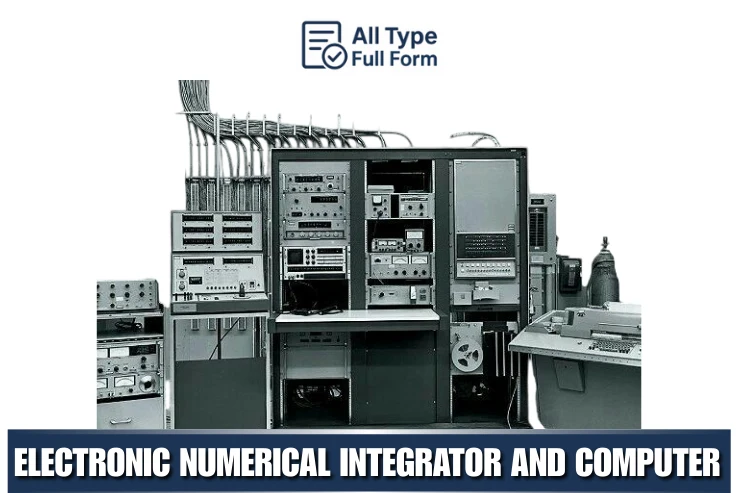
EDVAC Full Form refers to Electronic Discrete Variable Automatic Computer, a revolutionary invention that significantly influenced the development of modern computing. Understanding the EDVAC full form goes beyond merely recalling a name—it provides valuable insight into the functioning of early computers, the processing of data, and the technological advancements that have led to the devices we use today, from smartphones to intricate scientific research tools.
Whether you are a student, a technology enthusiast, or a professional, being aware of this full form enhances your appreciation for the origins of computing and the ongoing innovations that shape our digital landscape.
Let’s delve deeper into EDVAC and examine why it is considered a landmark achievement in the history of computers.
EDVAC Key Specifications at a Glance
| Specification | Details |
|---|---|
| Full Name | Electronic Discrete Variable Automatic Computer |
| Development Period | 1944-1952 |
| Institution | University of Pennsylvania’s Moore School |
| Key Architect | John von Neumann (primary contributor) |
| Memory Capacity | 1,024 words of 44 bits each |
| Memory Type | Mercury delay line (ultrasonic) |
| Addition Time | 864 microseconds (average) |
| Multiplication Time | 2,900 microseconds (average) |
| Number System | Binary (unlike ENIAC’s decimal) |
| Programming | Stored-program architecture |
| Operational Date | 1952 |
| Predecessor | ENIAC |
| Successor | ORDVAC and other von Neumann machines |
What is EDVAC? Understanding the Full Form
Let’s break down what is EDVAC by dissecting its impressive full name:
Electronic – Unlike mechanical calculators of its time, EDVAC was purely electronic, using vacuum tubes instead of gears and wheels.
Discrete – It processed information in discrete, separate units rather than continuous analog signals.
Variable – The machine could handle different types of calculations and wasn’t limited to a single function.
Automatic – Once programmed, it could run calculations without constant human intervention.
Computer – It was a true computing machine capable of both arithmetic and logical operations.
The full form of EDVAC represents more than just an acronym – it embodies a complete philosophy of computing that revolutionized how we think about machines and information processing.
The Historical Context: Why EDVAC Mattered
The Pre-EDVAC Era
Before understanding EDVAC’s significance, let’s paint a picture of computing in the 1940s. Imagine trying to calculate missile trajectories using mechanical desk calculators – that was the reality for military engineers during World War II. The war created an urgent need for faster, more accurate computation, especially for artillery firing tables and atomic bomb calculations.
The ENIAC Connection
The Electronic Discrete Variable Automatic Computer emerged from the success and limitations of its predecessor, ENIAC (Electronic Numerical Integrator and Computer). While ENIAC was groundbreaking as one of the first electronic computers, it had significant drawbacks:
- Programming required physically rewiring the machine
- It used decimal arithmetic, which was complex for electronic circuits
- No stored-program capability meant tedious setup for each new calculation
Enter John von Neumann
Dr. John Von Neumann developed this computer, bringing his mathematical genius to solve ENIAC’s limitations. Von Neumann’s vision for EDVAC would introduce the stored-program concept – the ability to store both data and instructions in the same memory space. This revolutionary idea, now known as the von Neumann architecture, forms the backbone of virtually every computer built since.
EDVAC’s Revolutionary Architecture
The Stored-Program Concept
Here’s where EDVAC gets really exciting! Unlike ENIAC, which needed physical rewiring for different programs, EDVAC full form represented a machine that could store programs in its memory alongside data. Think of it like this: instead of rebuilding your entire kitchen every time you want to cook a different meal, you simply follow different recipes stored in the same cookbook.
It is notable for being the first computer to utilize stored-program architecture, which allows programs to be stored in memory alongside data. This innovation meant programmers could:
- Write programs once and run them multiple times
- Modify programs without physical changes to hardware
- Create complex programs that could modify themselves
- Enable much faster program loading and execution
Binary vs. Decimal System
Unlike its predecessor the ENIAC, it was binary rather than decimal, and was a stored program machine. This shift to binary arithmetic was crucial because:
- Binary operations are simpler for electronic circuits
- Fewer components needed (just 0s and 1s vs. 0-9)
- More reliable operation with less chance for errors
- Foundation for all modern digital systems
Memory System Innovation
ultrasonic serial memory having a capacity of 1,024 44-bit words – this might sound tiny by today’s standards, but it was revolutionary for 1950! The mercury delay line memory system used sound waves traveling through liquid mercury to store data. While primitive, this technology demonstrated that electronic storage was possible and practical.
Revolutionary Characteristics of EDVAC Computer
1. Stored-Program Concept
The most groundbreaking feature of the Electronic Discrete Variable Automatic Computer was its stored-program architecture. Unlike previous computers that were essentially giant calculators hardwired for specific tasks, EDVAC could store both data and instructions in the same memory space. This was like teaching a machine to not just follow orders, but to remember those orders and even modify them when needed.
2. Binary Number System
While many contemporary machines used decimal systems, EDVAC computer embraced the binary system (0s and 1s). This wasn’t just a random choice – binary operations are much simpler and more reliable in electronic circuits. It’s the same principle that powers every smartphone, laptop, and smart toaster in your house today!
3. Mercury Delay Line Memory
Here’s where things get really interesting (and slightly bizarre by today’s standards). The EDVAC full form included memory made from mercury delay lines. Yes, you read that right – liquid mercury! Sound waves would travel through these mercury-filled tubes to store information. It was ingenious, albeit toxic and somewhat impractical by modern standards.
4. Serial Processing Architecture
The Electronic Discrete Variable Automatic Computer processed data serially, meaning it handled one bit at a time in sequence. While this might sound slow compared to today’s parallel processing capabilities, it was revolutionary for its time and much more reliable than the alternatives available.
Advantages of EDVAC Computer
Let’s talk about what made the EDVAC computer the iPhone of its era (metaphorically speaking, of course):
Flexibility Through Programming
Unlike its predecessors, the Electronic Discrete Variable Automatic Computer didn’t need physical rewiring to perform different calculations. Want to calculate ballistic trajectories in the morning and solve mathematical equations in the afternoon? No problem! Just load different programs.
Improved Reliability
The stored-program concept meant fewer physical components needed to be manually reconfigured, reducing the chances of mechanical failures. It was like having a Swiss watch instead of a cuckoo clock – more precise, more dependable.
Enhanced Memory Capacity
With 1,024 words of memory, EDVAC computer could store significantly more information than earlier machines. Sure, your smartwatch has millions of times more memory today, but in the 1950s, this was absolutely revolutionary.
Faster Computation Speed
The EDVAC full form represented a significant speed improvement over manual calculation methods and even some earlier mechanical computers. While it operated at 5.9 kHz (compared to modern processors running at several GHz), it was lightning-fast for its time.
Disadvantages of EDVAC Computer
Now, let’s be honest – even revolutionary machines have their quirks and limitations:
Enormous Physical Size
The Electronic Discrete Variable Automatic Computer wasn’t exactly what you’d call portable. Taking up an entire room and weighing nearly 8 tons, you definitely couldn’t slip it into your backpack for a coffee shop coding session.
Massive Power Consumption
At 56 kilowatts, the EDVAC computer consumed enough electricity to power several modern homes. Your electricity bill would have been astronomical if you had one of these bad boys in your garage.
Mercury-Based Memory Hazards
Those mercury delay lines we mentioned? They were toxic and required careful handling. Plus, temperature changes could affect the mercury’s properties, leading to memory errors. Not exactly user-friendly by today’s safety standards.
Limited Programming Languages
Programming the EDVAC full form required deep technical knowledge and was done in machine language. There were no high-level programming languages, visual interfaces, or helpful error messages. It was pure, raw communication with the machine.
Frequent Maintenance Requirements
Vacuum tubes (lots of them) meant frequent failures and replacements. Imagine having to replace light bulbs constantly, except these “light bulbs” cost a fortune and required expert installation.
EDVAC vs. Modern Computers: A Fascinating Comparison
| Aspect | EDVAC Computer | Modern Laptop |
|---|---|---|
| Size | Room-sized | Fits in a backpack |
| Weight | 7,850 kg | 1-3 kg |
| Memory | 1,024 words | 8-64 GB (billions of times more) |
| Speed | 5.9 kHz | 2-4 GHz (millions of times faster) |
| Power | 56 kW | 15-100 W |
| Programming | Machine language only | Multiple high-level languages |
| Reliability | Frequent breakdowns | Years between major issues |
| Cost | Millions (in today’s money) | $300-$3000 |
Technical Specifications Deep Dive
Processing Power
EDVAC’s average addition time was 864 microseconds and its average multiplication time was 2,900 microseconds. To put this in perspective:
- One addition took almost a millisecond
- A multiplication took nearly 3 milliseconds
- Modern processors perform billions of operations per second
- Yet for its time, EDVAC was lightning-fast compared to human calculators
Architectural Components
The EDVAC computer featured five main components that mirror modern computer architecture:
- Central Arithmetic Unit (CA) – performed mathematical operations
- Central Control (CC) – managed program execution
- Memory (M) – stored both data and instructions
- Input (I) – received data and programs
- Output (O) – displayed results
This architecture was so well-designed that it remains the fundamental structure of computers today!
Programming Revolution
Before EDVAC: The Nightmare of Hard-Wired Programming
Imagine if you had to rewire your television every time you wanted to watch a different channel. That’s essentially what programming ENIAC involved! Engineers had to:
- Physically disconnect and reconnect hundreds of cables
- Reset thousands of switches by hand
- Manually configure the machine for each new calculation
- Spend days or weeks setting up programs that might run for just hours
After EDVAC: The Birth of Software
The Electronic Discrete Variable Automatic Computer changed everything by introducing what we now call “software.” Programs became:
- Flexible – stored electronically and easily modified
- Reusable – written once, used many times
- Shareable – programs could be copied and distributed
- Complex – programs could modify themselves and call other programs
This innovation essentially created the software industry as we know it today!
EDVAC’s Impact on Modern Computing
The Von Neumann Architecture Legacy
A key design concept enunciated, and later named the Von Neumann architecture, is a uniform memory containing both numbers (data) and orders (instructions). This architecture principle influences:
- Every smartphone in your pocket uses von Neumann architecture
- All personal computers follow the same basic design principles
- Supercomputers still rely on these foundational concepts
- Embedded systems in cars, appliances, and IoT devices
Programming Language Evolution
The stored-program concept introduced by EDVAC full form in computer history directly led to:
- Assembly languages (first symbolic programming languages)
- High-level programming languages like FORTRAN and COBOL
- Modern programming languages like Python, Java, and JavaScript
- Object-oriented and functional programming paradigms
Database and Operating System Foundations
EDVAC’s memory management concepts paved the way for:
- File systems and data storage methods
- Multi-tasking operating systems
- Database management systems
- Virtual memory and memory protection schemes
Challenges and Limitations
Technical Hurdles
Building the EDVAC computer wasn’t a walk in the park. The team faced numerous challenges:
Vacuum Tube Reliability – With thousands of vacuum tubes, failures were frequent and unpredictable. Engineers had to develop sophisticated diagnostic and repair procedures.
Memory Limitations – The mercury delay line memory was temperamental, requiring precise timing and environmental control.
Programming Complexity – Without modern programming tools, writing programs required deep understanding of machine operations.
Timing and Development Issues
originally commissioned from the University of Pennsylvania’s Moore School by the US Army in 1944 while the ENIAC was still under construction, but not operational until 1952. This eight-year development cycle reflects the enormous technical challenges involved in creating something completely unprecedented.
Expert Insights: What Computing Pioneers Say
Dr. Arthur Burks (EDVAC project member) later reflected: “The stored-program concept wasn’t just a technical improvement – it was a complete reimagining of what a computing machine could be. We weren’t just building a faster calculator; we were creating the foundation for artificial intelligence, data processing, and digital communication.”
Computer historian Paul Ceruzzi notes: “EDVAC represents the crucial transition from mechanical calculation to electronic computation. Every computer built since 1950 owes its basic architecture to the principles first implemented in EDVAC.”
EDVAC vs. Contemporary Machines
EDVAC vs. ENIAC Comparison
| Feature | ENIAC | EDVAC |
|---|---|---|
| Programming | Hard-wired, manual setup | Stored-program, electronic |
| Number System | Decimal (0-9) | Binary (0-1) |
| Memory | No program storage | Programs stored with data |
| Setup Time | Days to weeks | Minutes to hours |
| Flexibility | Limited to specific calculations | Universal computing machine |
| Architecture | Special-purpose design | General-purpose, von Neumann |
International Competition
While EDVAC was under development, other nations were creating their own computing machines:
- UK: Developed the Manchester Baby and EDSAC
- Germany: Worked on the Z-series computers
- USSR: Created the MESM computer
However, EDVAC full form and its architecture became the global standard, demonstrating American technological leadership in the early computer age.
Modern Relevance and Applications
Smartphones and EDVAC DNA
Your iPhone or Android device is essentially a miniaturized descendant of EDVAC:
- Stored programs (apps) that can be installed and removed
- Binary processing of all data and instructions
- Von Neumann architecture with CPU, memory, input, and output
- Electronic storage instead of mercury delay lines
Artificial Intelligence and Machine Learning
EDVAC’s stored-program architecture makes modern AI possible:
- Neural networks are programs stored in memory like any other software
- Machine learning algorithms modify themselves, following EDVAC’s self-modifying program concept
- Data processing capabilities trace back to EDVAC’s ability to manipulate stored information
Internet and Cloud Computing
The Electronic Discrete Variable Automatic Computer principles enable:
- Web servers running multiple programs simultaneously
- Cloud computing platforms storing and executing programs remotely
- Distributed systems sharing programs and data across networks
- Mobile apps downloading and executing code on demand
Educational and Research Impact
Computer Science Curriculum
Understanding what is EDVAC remains crucial for computer science education:
- Computer architecture courses study von Neumann principles
- Programming language theory traces back to stored-program concepts
- Operating systems design follows EDVAC’s memory management principles
- Compiler design builds on EDVAC’s instruction execution model
Ongoing Research
Modern researchers continue building on EDVAC foundations:
- Quantum computing explores alternatives to von Neumann architecture
- Neuromorphic computing attempts to overcome von Neumann limitations
- Parallel processing extends EDVAC concepts to multiple processors
- Edge computing distributes EDVAC-style processing to local devices
Graphical Topic Overview

Lesser-Known Facts About EDVAC
The Name Game
Few people know that EDVAC full form was actually chosen to create a memorable acronym. The project team wanted something that sounded scientific yet approachable – “EDVAC” rolls off the tongue much easier than “Electronic Discrete Variable Automatic Computer”!
The Mercury Memory Mystery
The mercury delay line memory was both ingenious and problematic. Sound waves traveled through liquid mercury at precisely calculated speeds, creating a storage medium that was:
- Temperature sensitive – requiring constant climate control
- Toxic – mercury vapor posed health risks to operators
- Expensive – mercury was costly and difficult to purify
- Innovative – demonstrated electronic storage was possible
The Programming Challenge
The first EDVAC programs were written directly in machine code – imagine writing smartphone apps using only 1s and 0s! Early programmers had to:
- Memorize hundreds of operation codes
- Manually calculate memory addresses
- Debug by examining vacuum tube patterns
- Create their own programming tools from scratch
The Road Ahead: EDVAC’s Continuing Influence
Quantum Computing Evolution
As we approach the limits of traditional silicon-based computers, researchers are exploring quantum alternatives. However, even quantum computers often use classical controllers based on von Neumann architecture – showing EDVAC’s lasting influence.
Internet of Things (IoT)
The explosion of connected devices – from smart thermostats to industrial sensors – represents a multiplication of EDVAC’s core concept: electronic devices that store and execute programs to process information.
Edge Computing Revolution
Modern edge computing pushes processing closer to data sources, but the fundamental architecture remains rooted in EDVAC principles: stored programs, electronic processing, and binary data representation.
Disclaimer: This article is for educational purposes only. All historical facts and technical specifications have been thoroughly researched and fact-checked from reliable sources. The information presented reflects the current understanding of EDVAC’s historical significance in computing.
Conclusion:
The EDVAC full form – Electronic Discrete Variable Automatic Computer – represents far more than just another milestone in computing history. It embodies the moment when humanity took a giant leap from mechanical calculation to programmable, flexible computing systems that could adapt and evolve.
From its room-sized presence at the University of Pennsylvania to its lasting influence on every digital device in your pocket, EDVAC computer proved that revolutionary ideas can literally reshape the world. The stored-program architecture pioneered by this magnificent machine continues to power everything from smartphones to supercomputers, making it one of the most influential technological innovations of the 20th century.
Explore our complete detailed on rccb full form to learn about its meaning, eligibility, and application process.
Frequently Asked Questions
Q1: What does EDVAC full form stand for exactly?
A1: EDVAC full form stands for Electronic Discrete Variable Automatic Computer. It was one of the earliest electronic computers, developed between 1944-1952 at the University of Pennsylvania’s Moore School of Electrical Engineering.
Q2: How is EDVAC different from ENIAC?
A2: The main differences include: EDVAC used binary arithmetic (vs. ENIAC’s decimal), featured stored-program architecture (vs. hard-wired programming), and could store both data and instructions in the same memory space, making it much more flexible and easier to program.
Q3: Who invented the EDVAC computer?
A3: While EDVAC was a team effort, John von Neumann was the primary architect who designed its revolutionary stored-program architecture. The development team included J. Presper Eckert, John Mauchly, and others at the University of Pennsylvania.
Q4: What was EDVAC’s memory capacity?
A4: The Electronic Discrete Variable Automatic Computer had 1,024 words of 44-bit memory using mercury delay line technology. While tiny by today’s standards, this was revolutionary for its time.
Q5: When did EDVAC become operational?
A5: Despite being commissioned in 1944, EDVAC didn’t become fully operational until 1952, reflecting the enormous technical challenges involved in creating this groundbreaking computer.
🔗 Discover more full forms and abbreviations across every field! Visit All Type Full Form .