
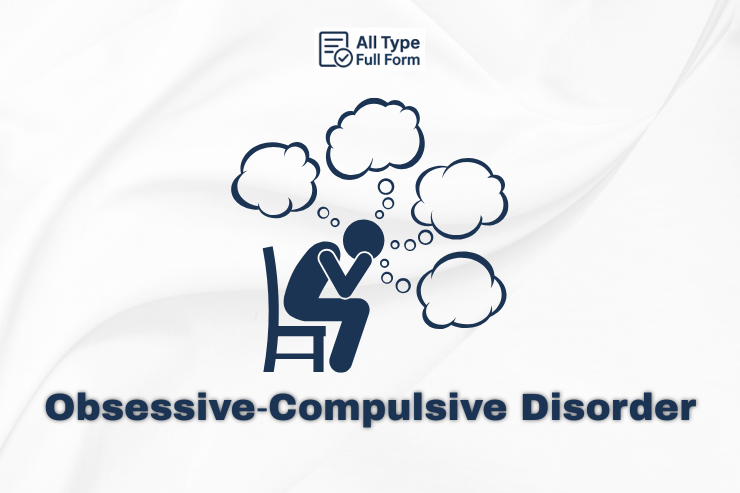
OCD Full Form – What Does OCD Mean? 🤔
OCD Full Form stands for Obsessive‑Compulsive Disorder—a mental health condition where a person experiences obsessions (unwanted, repetitive thoughts) and compulsions (ritualized behaviors meant to ease stress).
What Are Obsessions and Compulsions?
-
Obsessions: Intrusive thoughts like fear of germs, needing things to be perfect, or worrying about harm coming to loved ones.
-
Compulsions: Repetitive acts such as excessive hand washing, checking locks, counting, or mental rituals like silently repeating words.
These obsessions create anxiety, and the compulsions temporarily relieve it—but ultimately reinforce the cycle.
Who Can Have OCD?
OCD can begin in childhood or young adulthood, but sometimes later.
It affects all ages and genders, impacting daily routines, school, work, and relationships.
What Causes OCD?
Researchers have identified several possible factors 🤓:
-
Genetics: It often runs in families.
-
Brain biology: Issues in brain regions like the orbitofrontal cortex and basal ganglia may play a role.
-
Life stress or trauma: Stressful events can trigger symptoms.
-
Rare triggers: In kids, strep infections (PANDAS) can intensify OCD.
OCD: A Cycle That Impacts Life
The hallmark of OCD is the obsession–anxiety–compulsion–relief loop:
-
Intrusive thought → 2. Anxiety → 3. Compulsion → 4. Temporary relief → Repeat.
Though relief feels real for a moment, it’s short-lived—and the cycle continues, consuming time and energy.
How Is OCD Treated?
Good news: OCD is treatable with proper help! ✅
-
Cognitive Behavioral Therapy (CBT) with Exposure and Response Prevention (ERP) is the gold standard.
-
Medication, mainly SSRIs, can help balance brain chemistry.
-
Mindfulness techniques—like meditation—help control unwanted thoughts and reduce compulsive urges.
When Should You Seek Help?
-
If obsessions/compulsions consume an hour or more per day, or
-
If they interfere with school, work, or relationships, it’s time to see a health professional.
Don’t wait—early treatment leads to better results.
Quick OCD Full Form & Fun Facts
-
Full Form: Obsessive‑Compulsive Disorder
-
Affects: ~2% of people at some point in life.
-
Misconceptions: OCD isn’t perfectionism—it’s a real psychiatric condition that can disrupt lives.
Takeaway
🏅 OCD = Obsessive‑Compulsive Disorder, a serious but treatable mental health condition.
🧠 It involves persistent obsessions and compulsions that interfere with daily life.
✨ With therapy (like CBT/ERP), possibly medication, and support, those affected can regain control and lead full lives.
Final Tip
If you or someone you know suspects OCD—don’t hesitate! Reach out to a counselor, psychologist, or support group. Understanding the OCD full form is the first step; seeking help is the next. Your curiosity can ignite a journey toward mental well-being. 🌱
✔️✔️Read Also – >> WWW vs Internet, Understand the Key Difference in 60 Seconds